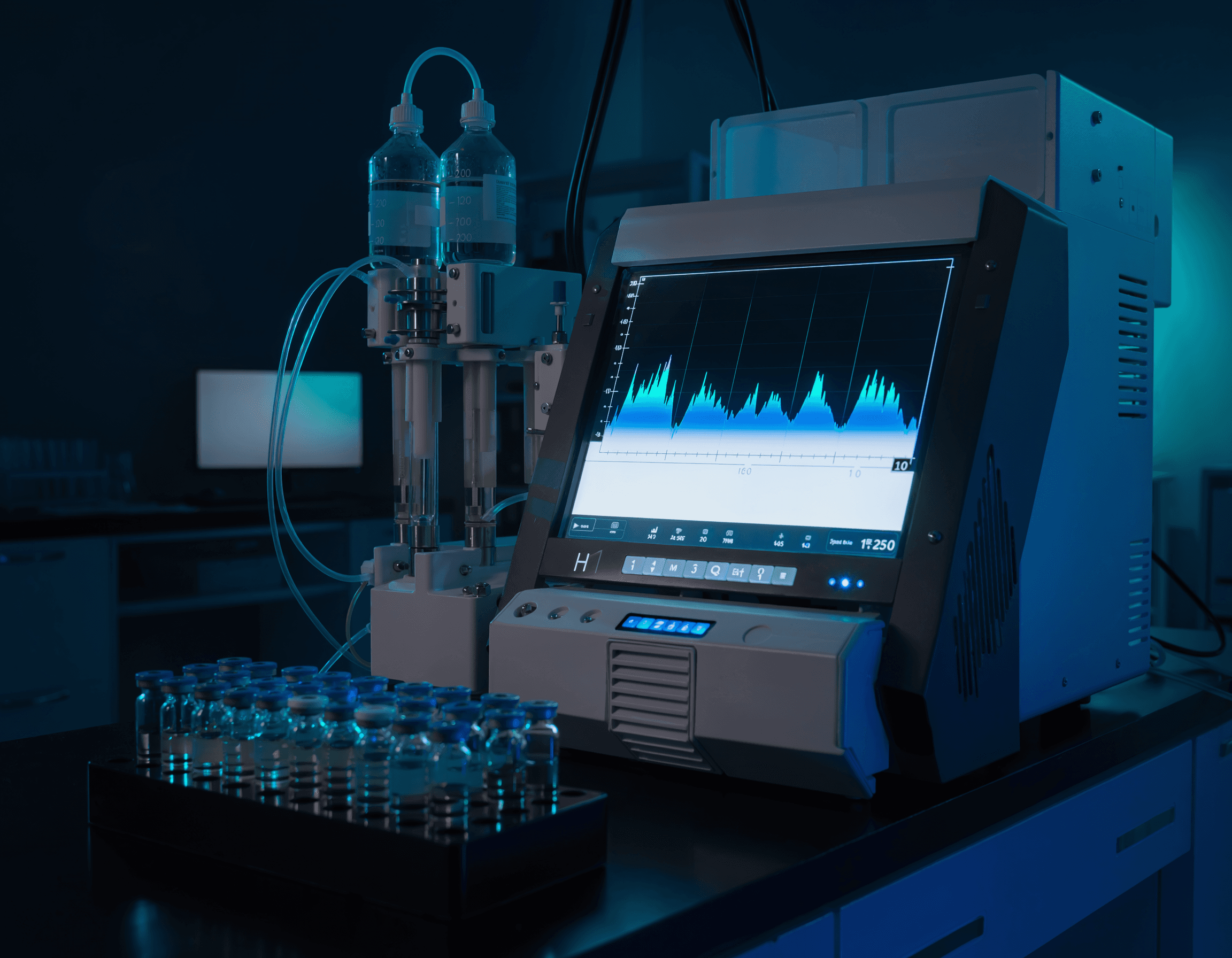
High-performance liquid chromatography (HPLC) is the backbone of peptide quality control. Every batch we release is characterized by reverse-phase HPLC against a qualified reference standard — not because regulators require a single number, but because chromatography reveals what mass spectrometry alone cannot: co-eluting impurities at trace levels.
Why reverse-phase HPLC?
Peptides are polar, often amphipathic molecules. Reversed-phase separation on a C18 column with a gradient of acetonitrile in aqueous buffer resolves the main peak from deletion sequences, oxidized variants, and aggregation products. The area percent of the target peak relative to total integrated area is our reported purity.
C18H32O2 fatty-acid contaminants and buffer additives are excluded from integration windows defined in our validated SOP.
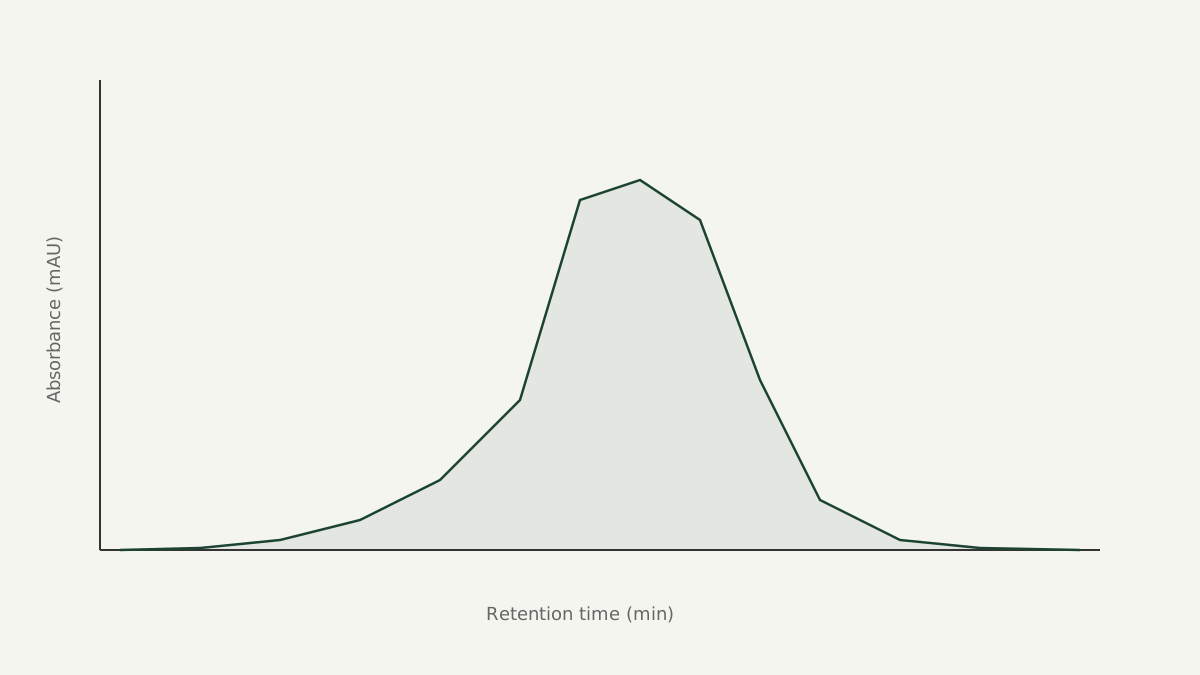
Reading the chromatogram
Analysts evaluate three parameters before signing a COA:
- Peak symmetry — tailing suggests column degradation or sample overload.
- Resolution (Rs) — adjacent peaks must meet Rs ≥ 1.5 against the main component.
- Relative retention time — compared to the reference standard lot; drift beyond ±2% triggers investigation.
Beyond the percentage
A purity value of 99.4% is meaningless without context. We report the integration method, wavelength (214 nm for peptide bond absorbance), and column lot. When impurity profiles shift between batches of the same catalog SKU, we flag the change in the batch record — even if the headline purity still exceeds specification.
For research use only (RUO) peptides, this transparency lets your lab reproduce our analytical conditions and compare incoming material against your internal reference.