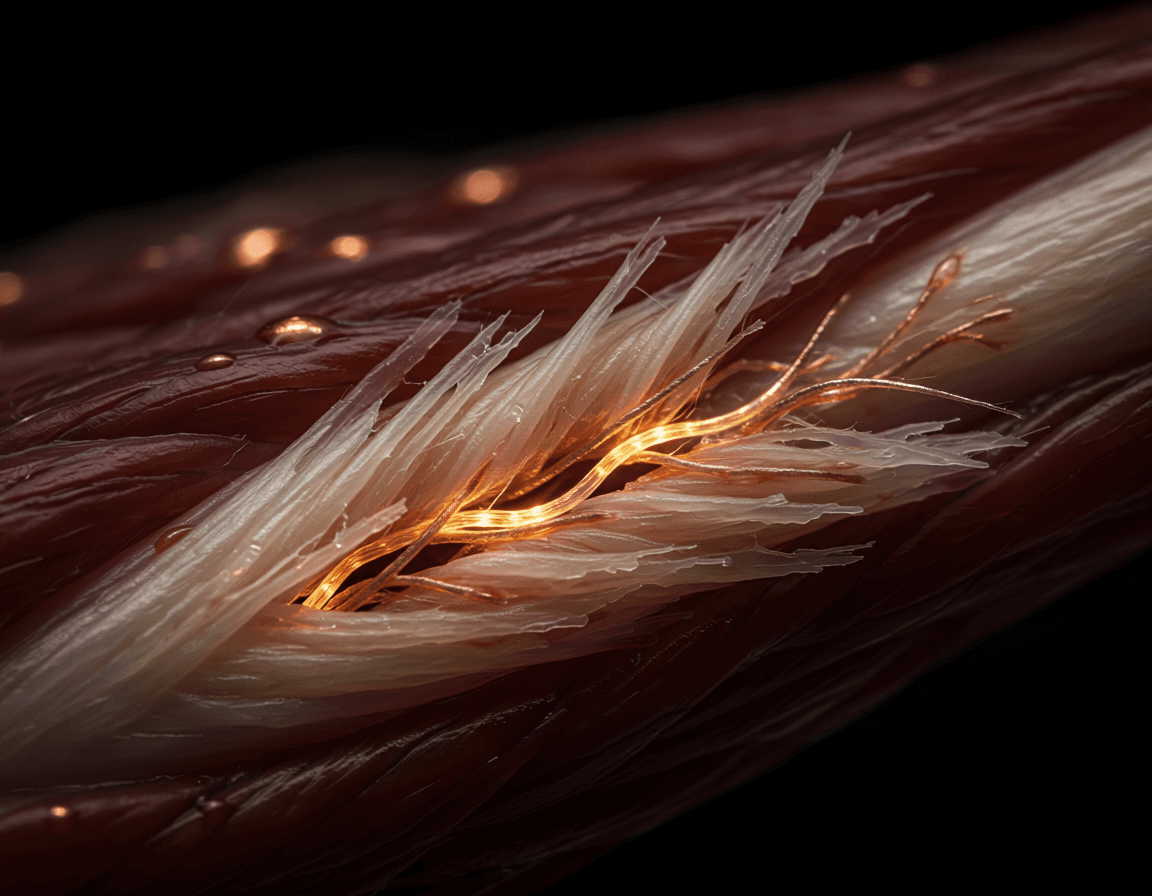
BPC-157 (Body Protection Compound-157) is a synthetic pentadecapeptide — a chain of 15 amino acids — derived from a protein sequence naturally present in human gastric juice. Despite its humble origin, more than 60 peer-reviewed publications have explored its effects on tissue healing, inflammation modulation, and neuroregulation. No other research peptide of comparable length has received this degree of consistent preclinical attention.
What makes BPC-157 unusual
Most peptides degrade rapidly in the gastrointestinal tract. BPC-157 appears stable under acidic conditions, which is part of why researchers believe its native role involves mucosal protection. In experimental models, the compound retains activity when administered orally, subcutaneously, or applied locally to the site of injury — an unusual pharmacological flexibility.
Mechanisms identified in research
The compound does not act through a single receptor. Current evidence points to several parallel mechanisms:
Angiogenesis acceleration — BPC-157 upregulates VEGF (vascular endothelial growth factor) expression, stimulating the formation of new capillaries at wound sites. More blood supply means faster delivery of oxygen, nutrients, and immune cells.
Nitric oxide modulation — Research suggests BPC-157 interacts with the NO-system, counteracting some effects of NOS inhibitors and modulating vascular tone. This may explain its documented effects on blood pressure in rodent models.
Growth hormone receptor sensitisation — Studies from the Sikirić group (University of Zagreb) indicate BPC-157 may upregulate GH receptors in injured tissue, amplifying local growth hormone signalling without raising systemic GH levels.
Tendon-to-bone healing — A specific documented effect involves the tendon-bone junction (enthesis). BPC-157 has been shown to outperform standard healing rates for rotator cuff tears, Achilles tendon transections, and medial collateral ligament injuries in animal models.
Selected preclinical findings by tissue type
| Tissue | Model | Key finding |
|---|---|---|
| Achilles tendon | Rat transection | 50–80% faster biomechanical recovery vs. control |
| Gastric mucosa | Rat ulcer model | Complete healing 2–4× faster; effective orally and SC |
| Skeletal muscle | Rat crush injury | Reduced fibrosis markers; improved contractile recovery |
| Peripheral nerve | Rat sciatic crush | Accelerated axonal regrowth and functional recovery |
| Colon anastomosis | Post-surgical rat | Improved anastomotic strength; reduced leak rate |
Inflammation profile
TNF-α and IL-6 are two primary pro-inflammatory cytokines that BPC-157 consistently modulates downward in published rodent studies. This effect appears tissue-agnostic — observed in gut, muscle, tendon, and central nervous system models alike. Critically, the anti-inflammatory effect does not appear to come at the cost of normal immune surveillance; unlike corticosteroids, BPC-157 does not suppress systemic immunity in the models tested.
Neurological observations
An underreported area of BPC-157 research involves the brain and spinal cord. Several studies have examined its role in reversing or attenuating:
- Dopaminergic system disruption caused by neuroleptic drugs
- Dyskinesias in rodent models of Parkinson-adjacent conditions
- Alcohol and opioid withdrawal symptoms in animal protocols
The mechanism here remains less well characterised, but likely involves the same NO and VEGF-mediated pathways acting on CNS microvasculature.
Routes of administration in studies
| Route | Dose range | Onset observations |
|---|---|---|
| Subcutaneous | 1–10 µg/kg or 250–500 µg flat | Systemic distribution within 30–60 min |
| Intraperitoneal | 10–100 µg/kg | Used in most rodent pharmacokinetic studies |
| Oral / intragastric | 10 µg/kg – 10 mg/kg | Effective in GI models; bioavailability not quantified |
| Local injection | 1–10 µg in 0.1 ml | Applied directly to injured tendon or muscle |
The Zagreb research programme
The majority of BPC-157 publications originate from Professor Predrag Sikirić's laboratory at the University of Zagreb School of Medicine. This group has studied the compound since the late 1980s and has produced over 50 peer-reviewed papers characterising its effects across virtually every organ system. Independent replications from South Korean and Taiwanese groups have confirmed several key findings, particularly in tendon and gastric healing models.
What to look for in supplier documentation
When sourcing BPC-157 for research, request:
- HPLC purity ≥98%, with published chromatogram and method parameters
- ESI-MS identity confirmation matching the theoretical m/z of 1419.53 Da
- Certificate of Analysis referencing specific batch number and synthesis date
- Endotoxin testing (LAL assay), particularly if the material will be used in cell culture
The peptide is moderately hygroscopic and should be stored at −20 °C under desiccant. Reconstitution in 0.9% sterile saline or bacteriostatic water at 1 mg/mL is standard for stock preparation.